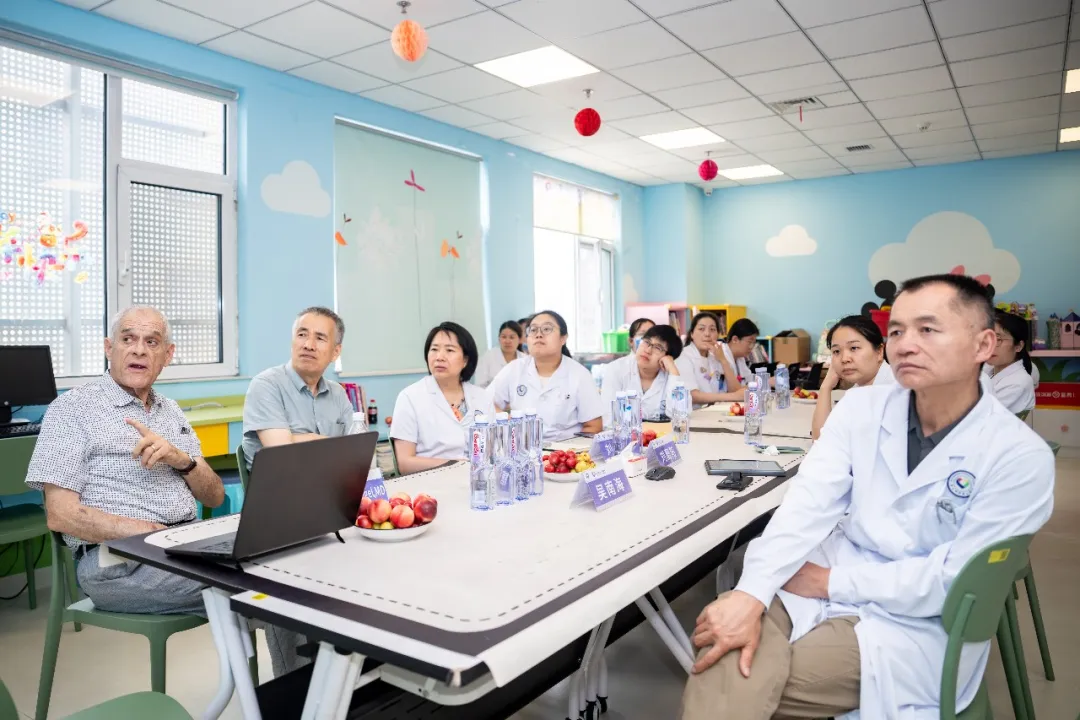
Participants at the AYA oncology international academic exchange
A Global Voice on AYA Cancer Care
The session, themed "Adolescent and Young Adult Oncology," brought together the hospital's hematology and oncology team with Professor Siegel for an in-depth discussion of international advances in this rapidly evolving field.
In his lecture, Professor Siegel introduced the background and current state of AYA oncology. AYA (Adolescent and Young Adult) oncology focuses on a special patient population between the ages of 15 and 39. This group differs significantly from both children and older adults in tumor biology, diagnosis and treatment, long-term quality of survival, and psychosocial needs.
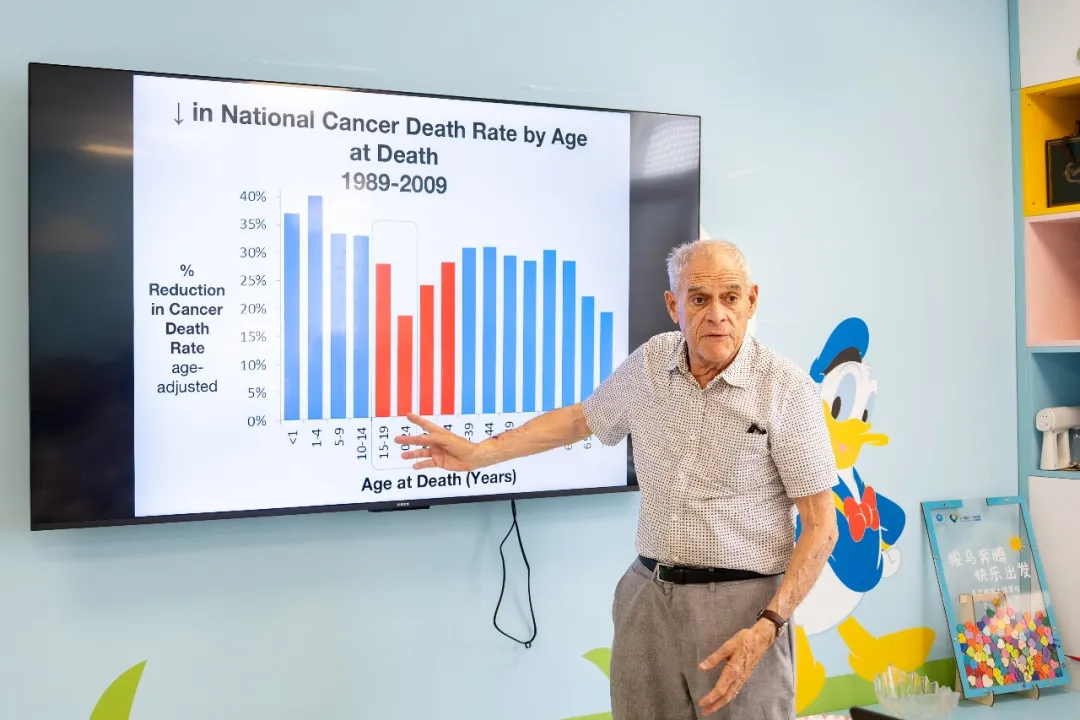
Professor Stuart Siegel presenting global trends in AYA cancer survival
Key Advances in AYA Oncology
Professor Siegel outlined the major achievements that have reshaped AYA cancer care in recent years:
- Survival improvements: Outcomes have risen markedly, especially in acute lymphoblastic leukemia (ALL) and non-Hodgkin lymphoma (NHL).
- Dedicated AYA treatment regimens: A growing number of AYA-specific protocols and collaborative-group studies have produced tailored therapeutic strategies for this unique population.
- Targeted therapy: Deeper understanding of AYA cancer biology has accelerated the development of precision-targeted treatments.
- Psychosocial support: The medical community has developed a more nuanced understanding of the psychological and social needs of AYA patients and their families, with corresponding interventions.
- Survivorship programs: Standardized survivorship models and specialized facilities and service standards are being established.
- Whole-person care: Comprehensive, coordinated care that addresses physical, psychological, and social dimensions is gaining recognition.
- Fertility preservation: Access to fertility preservation services has improved substantially.
- Professional organizations: AYA oncology societies in the United Kingdom, Australia, and the United States have been founded and expanded, advancing the discipline worldwide.
Together, these developments are building a new model of AYA cancer care: moving from disease-focused treatment alone to whole-person, multi-dimensional care that supports a smooth transition from pediatric to adult healthcare systems.
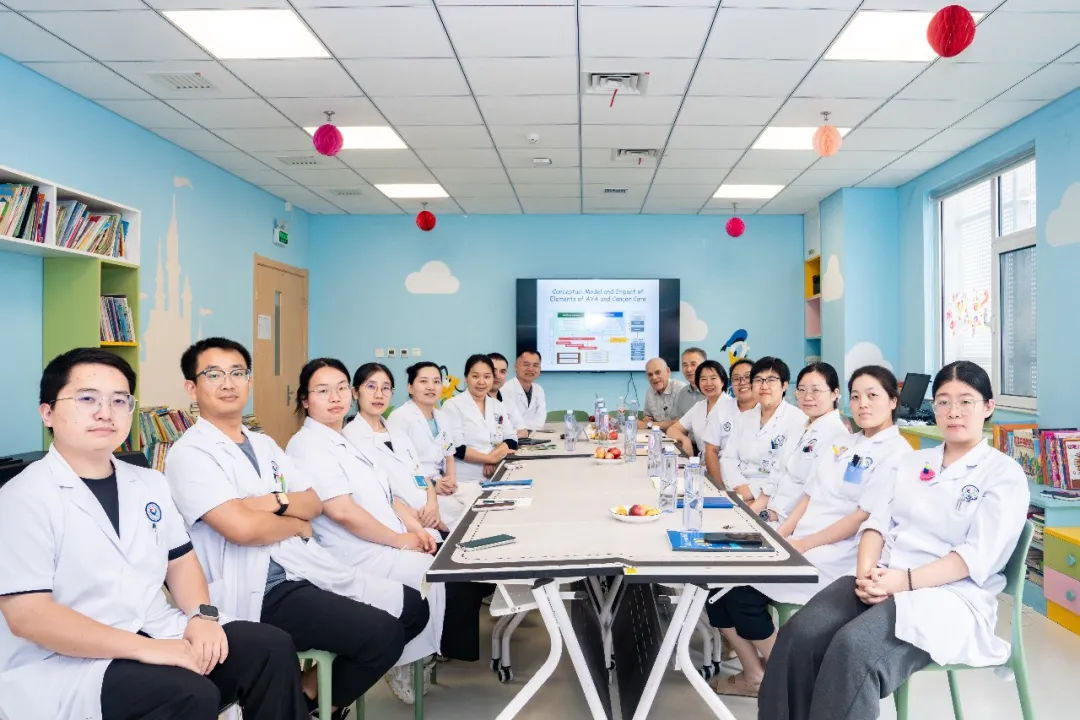
The Jingdu hematology and oncology team with Professor Stuart Siegel
Strengthening Jingdu's Global Partnerships
This exchange is another important step in Beijing Jingdu Children's Hospital's ongoing internationalization strategy. As a tertiary children's hospital committed to "academic excellence as the foundation of the hospital," Jingdu consistently values collaboration with international medical institutions and continuously improves its discipline-building and clinical capabilities through "bringing in" and "going out."
The hospital's Hematology & Oncology Center has established distinctive strengths in the diagnosis and treatment of pediatric blood diseases, rare diseases, and solid tumors. Going forward, Jingdu will continue to deepen international academic exchanges, driving pediatric oncology toward more precise, standardized, and human-centered care — bringing hope to more children and families.